How to Start CrossFit When You're Out of Shape (or Think You Are)
"I need to get in shape before I try CrossFit."
We hear this all the time. It makes complete sense on the surface — and it's also the thinking that keeps more people on the sidelines than almost anything else.
You don't need to be fit to start getting fit. That's not how it works. That's not how any of this works.
But the fear behind it is real, and it's worth taking seriously. So let's talk about what actually holds people back, what starting really looks like, and why waiting until you're "ready" is the one guarantee you never get there.
The myth of the starting line
Somewhere along the way, CrossFit developed a reputation for being extreme. The competition footage, the elite athletes, the workouts that look like something out of a military training program — it creates an impression that there's a minimum requirement to walk through the door.
There isn't.
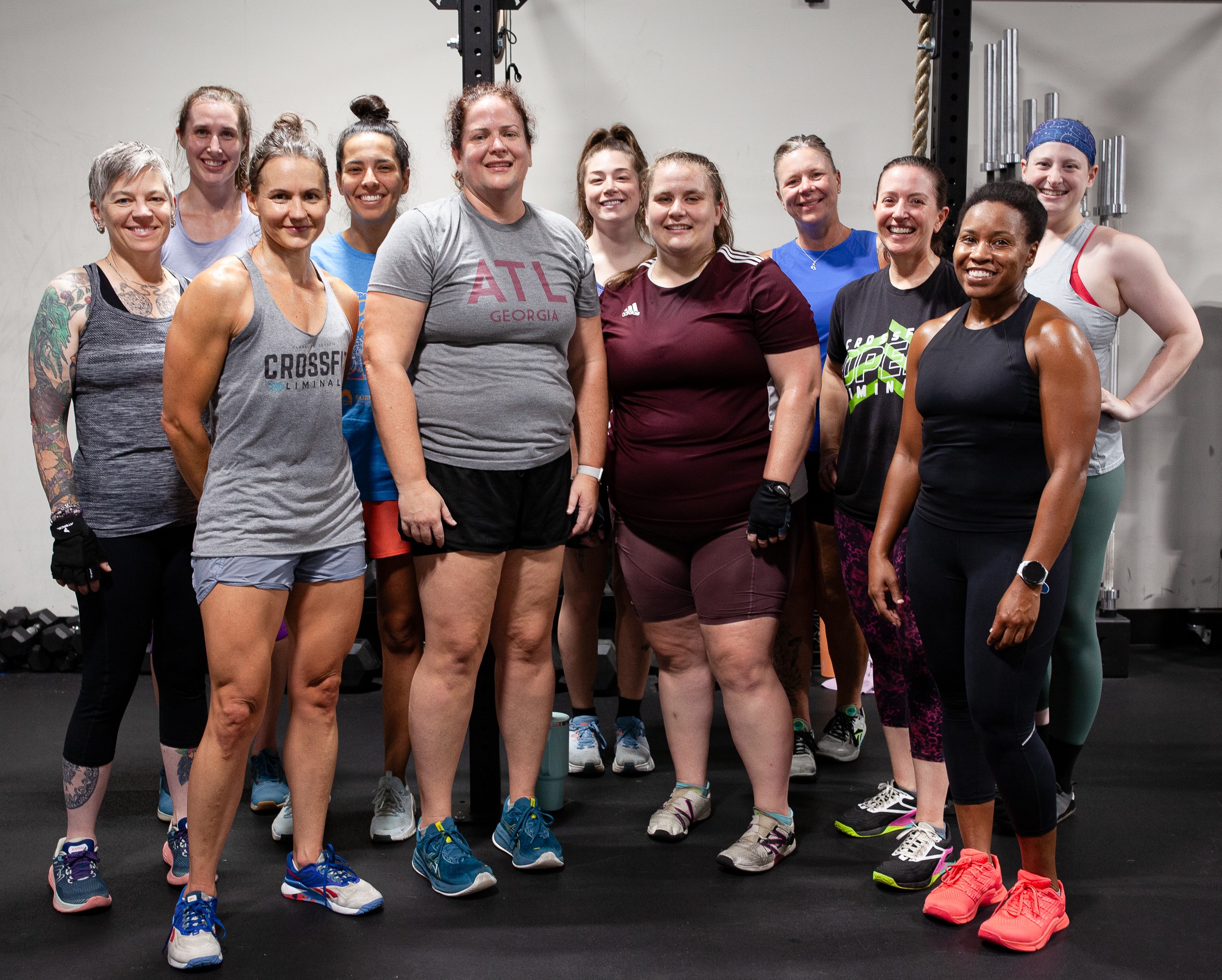
The people in CrossFit classes right now are not all elite athletes. They're teachers, parents, nurses, retirees, people who haven't exercised consistently in years. Some are dealing with old injuries. Some have never done structured fitness in their lives. The range is much wider than Instagram makes it look.
CrossFit is scalable by design. Every single workout can be modified — lighter weights, shorter distances, different movements, reduced reps. Scaling isn't a beginner track that you eventually graduate from. It's how intelligent training works at every level. Even experienced athletes scale when they're beat up, coming back from an injury, or pushing into a new skill. A good coach treats scaling as the smart play, not the consolation prize.
What "out of shape" actually means
When people say they're out of shape, they usually mean one of a few things: they're carrying more weight than they'd like, they get winded easily, they haven't exercised in a long time, or some combination of all three.
None of those things disqualify you from starting CrossFit. In fact, they're exactly the conditions CrossFit is designed to address.
The body adapts to what you give it. Cardiovascular capacity improves with consistent training — sometimes faster than people expect. Strength builds. Movement patterns become more natural over time. The body you have on day one is not the body you'll have six months in, or a year in, or three years in.
But none of that happens if you keep waiting to start.
The one thing that actually matters on day one
Showing up.
Not how much you can lift. Not how fast you can run. Not whether you can do a pull-up or touch your toes or remember the last time you broke a sweat. Just showing up.
Everything else — the fitness, the technique, the confidence — gets built after that. Not before.
The people who get the most out of CrossFit are not the ones who come in the most prepared. They're the ones who come in the most consistent. The person who shows up three times a week for two years, scaling as needed, listening to their coaches, and staying honest about where they are will outperform the person who comes in ready to crush it and burns out in six weeks. Every time.
What starting actually looks like at CrossFit Liminal
Before you walk into your first regular class at CrossFit Liminal, we take time with you.
We want to know where you're starting from — not to judge it, but to understand it. Past injuries, health conditions, what you've tried before and how it went. We introduce you to the foundational movements before you're expected to do them in a workout. That groundwork matters. It means you're not walking into your first class feeling lost, trying to watch the person next to you to figure out what your hands are supposed to be doing.
Once you're in class, you'll have a coach watching. Not someone glancing at a whiteboard and calling it a day — someone who knows your name, knows your history, and is paying attention to how you're moving. When something needs to be adjusted, they'll catch it. When you're ready to push further, they'll push you.
We also try to get every member into a goal review session at least once a year. Not because we need a formal check-in, but because it matters to us that what you're doing in the gym is actually connected to what you want out of your life. Fitness is not an end in itself. It's a means to something — more energy, more capability, more years of doing the things you love. Keeping that in focus changes how you train.
The thing nobody tells you
It's uncomfortable at first. That's real, and we're not going to pretend otherwise.
Your lungs will burn. Your legs will get sore in places you forgot existed. You'll look at some movements and think there is no way that's happening today. Some days you'll leave feeling like a different person, and some days you'll leave wondering what you got yourself into.
That discomfort is not a sign something is wrong. It's your body adapting. It's the gap between where you are and where you're capable of being, getting a little smaller. People who stick with it long enough always say the same thing: at some point, it clicks. The workouts start to feel different. You notice things you can do now that you couldn't a few months ago. You stop dreading it and start looking forward to it.
That shift takes time, and it doesn't happen on a schedule. But it doesn't happen at all if you're still waiting until you feel ready.
So when should you start?
Now. Whatever shape you're in, whatever your history with exercise, whatever story you've been telling yourself about why this isn't the right time — start now.
Not because it's easy. Because it isn't. And because the version of yourself you're trying to build is on the other side of that door, not on the other side of some future moment when everything lines up perfectly.
That moment doesn't come. You go get it.



.png)