Is CrossFit Safe? What the Research Actually Says
Here's the honest answer: everything that's worth doing carries some risk. Driving to work. Hiking with your dog. Playing pickleball on a Tuesday night. Physical activity — all of it — involves the possibility of getting hurt.
The question was never "is CrossFit risk-free?" Nothing is. The real question is whether the benefit is worth the risk. And when you look at the actual research, the answer for CrossFit is clear: it's not just worth it. It's one of the smartest choices you can make for your long-term health.
What the research actually shows
A 2018 study published in the Orthopaedic Journal of Sports Medicine found CrossFit's injury rate to be around 2 to 3 injuries per 1,000 hours of training — comparable to Olympic weightlifting, powerlifting, and distance running. Running, for context, comes in between 2.5 and 12 injuries per 1,000 hours depending on the study. Nobody tells people not to run.
But here's what most people don't know: pickleball — one of the fastest-growing recreational sports in America — has become one of the leading causes of injury in adults over 50. Research has documented injury rates significant enough that orthopedic surgeons have started calling it out specifically. Zumba, another activity widely considered "low-risk," has injury rates in some studies that rival contact sports, driven by the repetitive lateral movement and jumping on unprepared joints.
Nobody's out there warning people away from pickleball. But CrossFit gets the reputation?
The fear isn't data-driven. It's driven by dramatic social media clips and a loud minority of bad experiences — most of which trace back to bad coaching, not bad programming.
Every activity has a tradeoff. Choose yours wisely.
Working out is hard. Being unhealthy is harder. Those are both true — and you have to choose one.
The consequences of not exercising are not hypothetical. Cardiovascular disease, type 2 diabetes, loss of muscle mass, cognitive decline, early death — these are the documented outcomes of a sedentary life. They don't show up dramatically overnight. They accumulate quietly over years, until one day you can't do the things you used to do and you're not sure when that happened.
CrossFit's injury risk, in a well-coached environment, doesn't come close to those consequences. The tradeoff isn't even close.
Where injuries actually come from
When CrossFit injuries do happen, they're almost never random. They come from predictable places: going too heavy before the technique is there, ignoring real pain signals, training in a gym that prioritizes intensity over movement quality, or not scaling when scaling is the right call.
None of that is a CrossFit problem. That's a coaching problem — and it's completely preventable.
The coaching variable is everything
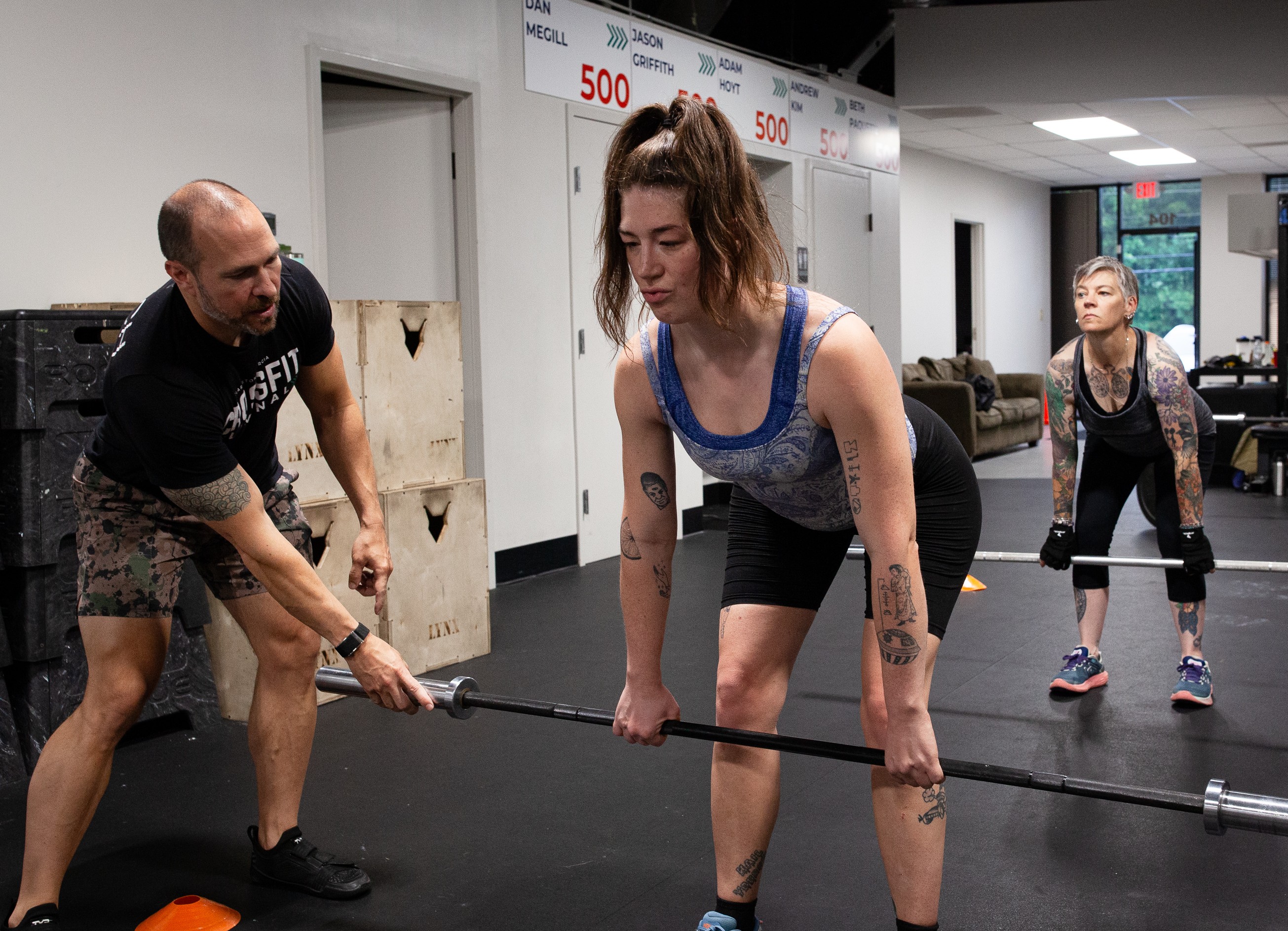
The single biggest predictor of injury in CrossFit isn't the movements. It's the environment. A good coach watches how you move, adjusts the workout to where you actually are, and builds your capacity over time instead of just chasing intensity. They treat scaling as intelligent training, not a consolation prize.
Not all CrossFit gyms operate this way. Some prioritize competition over coaching. Some throw new members into class on day one without any baseline assessment. If you've heard a bad CrossFit story, there's a good chance that's the environment it came from.
How we approach it at CrossFit Liminal
Before you ever step into a regular class at CrossFit Liminal, we spend time with you. We learn where you're starting from — past injuries, current limitations, movement history. We introduce you to the foundational movements before you're expected to do them in a workout. And once you're in class, every workout has scaling options because meeting you where you are isn't optional here — it's the standard.
Our coaches don't run workouts. They coach people. That difference matters, and it's the reason our members train for years without the horror stories.
So is CrossFit safe?
Yes — and more than that, it's one of the most effective, most well-rounded approaches to fitness that exists. The injury risk is real but manageable. The benefits — strength, cardiovascular health, body composition, longevity, quality of life — are significant and well-documented.
You can spend your life avoiding the things that challenge you and call it playing it safe. Or you can show up, do the work, and build a body that carries you well into your 70s and 80s.
That's not a risk. That's the whole point.


.png)