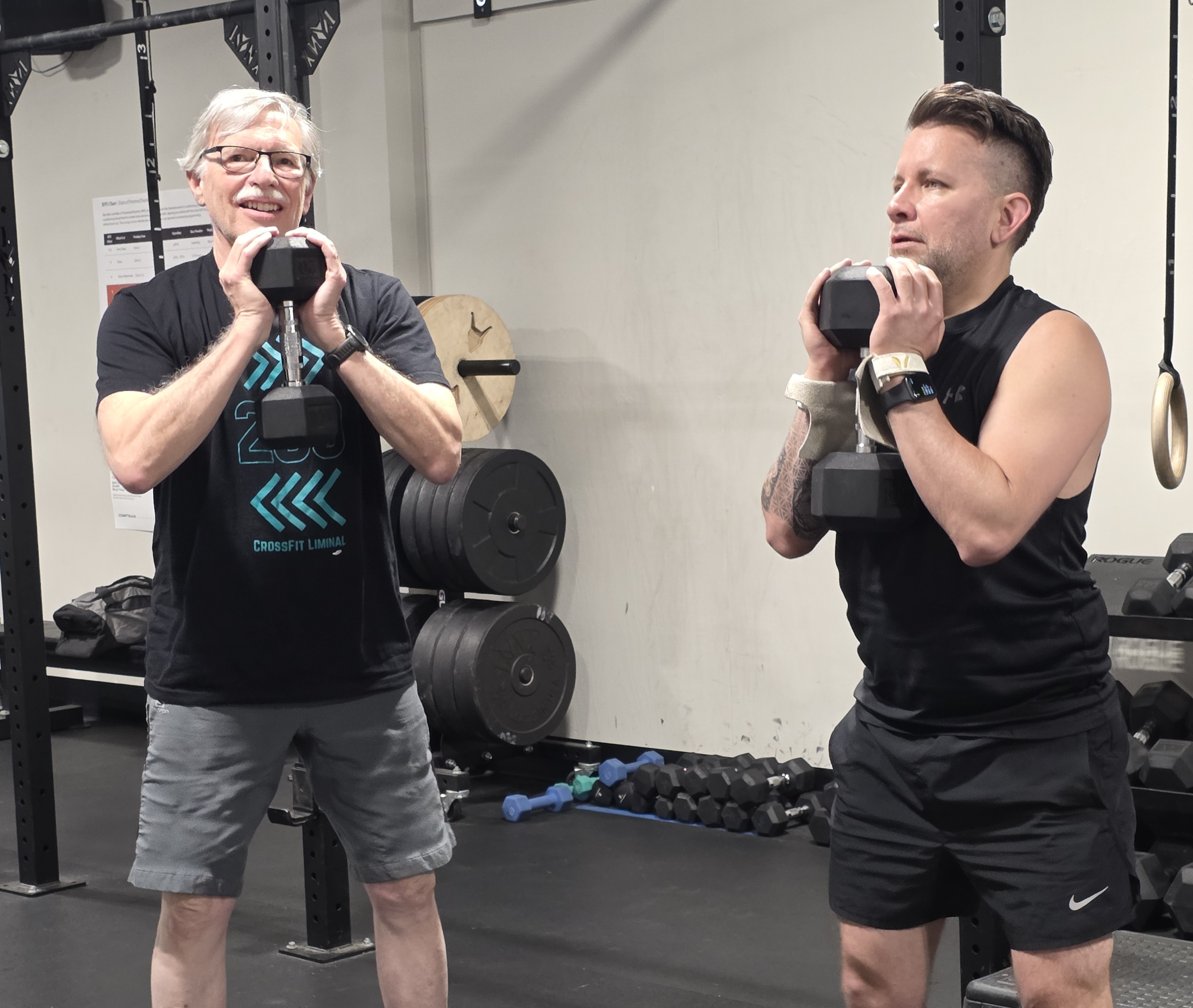
Why Strength Training Is the Most Important Thing You Can Do for Your Health After 40
At some point in your 40s, something shifts. Recovery takes longer. You feel it more the day after a long hike or a day of moving furniture. You look at people in their 70s and start doing math you didn't used to do.
Here's what most people don't realize: a lot of what we assume is "just aging" is actually something else. It's the predictable outcome of not doing enough resistance training.
That distinction matters, because one of those things you can't change, and the other one you can.
What's actually happening in your body
Starting around age 30, the body begins losing muscle mass — about 3 to 5 percent per decade under normal circumstances. By the time you're in your 60s and 70s, that loss can be significant enough to affect how you move, how easily you get hurt, and how independently you can live.
This process has a name: sarcopenia. It's not a disease. It's a physiological response to under-stimulation.
Alongside muscle loss, bone density tends to decline — particularly in women after menopause. The combination of less muscle and thinner bones is exactly what turns a stumble into a serious injury. It's why hip fractures in older adults are so dangerous, and why falls are one of the leading causes of injury-related death in people over 65.
There's also a metabolism piece. Muscle tissue is metabolically active — it burns calories at rest. Less muscle means a slower metabolism, which makes weight management harder and increases the risk of insulin resistance and type 2 diabetes.
None of this is inevitable. All of it is significantly affected by whether or not you train.
Why strength training specifically
Cardio is good. Walking, running, swimming — these have real health benefits. But they don't address the primary drivers of aging-related decline: muscle loss and bone density.
Resistance training does.
When you lift weights — or do any kind of resistance-based movement — you create mechanical stress on your muscles and bones. Your body responds by repairing and rebuilding them stronger. This is the basic principle behind all strength training, and it works at every age.
Studies consistently show that adults in their 60s, 70s, and even 80s who begin resistance training programs see meaningful improvements in muscle mass, strength, and bone density. The body doesn't lose the ability to adapt. It just needs the stimulus.
Beyond the structural benefits, research has linked regular strength training to better blood sugar regulation, lower blood pressure, improved cognitive function, reduced symptoms of depression and anxiety, and better sleep. The list is long, and it keeps getting longer as more research comes out.
A 2022 meta-analysis in the British Journal of Sports Medicine found that muscle-strengthening activities were associated with a 10 to 17 percent lower risk of all-cause mortality, cardiovascular disease, cancer, and diabetes. That's a meaningful number.
What this looks like in practice
You don't have to become a competitive weightlifter. The research on minimum effective dose is actually encouraging.
Two to three days per week of resistance training is enough to produce significant health benefits for most adults. The movements don't need to be complicated — squats, deadlifts, presses, rows, carries. Functional patterns that your body already knows how to do and that translate directly to how you move in real life.
The intensity matters more than most people realize. To actually stimulate muscle growth and bone density improvements, you need to train with some degree of effort — not grinding yourself into the ground every session, but working hard enough that the last few reps of a set feel genuinely challenging. Casual movement doesn't cut it for these specific adaptations.
Recovery becomes more important the older you get. Your body needs more time to repair between sessions. Sleeping enough, eating enough protein, and not training the same muscle groups two days in a row are all part of the equation.
The longevity angle
There's a framework that's gained a lot of traction in the longevity research world — the idea of training for what you want to be capable of at 80. What do you want to be able to do? Pick up grandchildren? Hike? Travel without a walker? Carry your own groceries?
Work backward from that. The capacity you have at 80 is largely built in the decades before. Muscle isn't something you can stockpile in your 30s and draw down forever — you have to keep earning it — but the habits you build now create the foundation.
Peter Attia, a physician focused on longevity, describes it this way: the people who are most physically capable in old age are not the ones who rested the most. They're the ones who maintained the most muscle and the most cardiovascular fitness over the course of their lives.
The thing people get wrong
The biggest mistake people make after 40 is treating exercise as optional — something to do when there's time, or when motivation hits. It gets crowded out by work, family, fatigue.
But if you're making decisions about health, the relevant comparison isn't "exercise vs. rest." It's "train now vs. deal with the consequences of not training in 20 years."
The consequences are specific, predictable, and harder to reverse the longer you wait. Starting at 50 is better than starting at 60. Starting at 60 is better than 70. There is no point at which it stops being worth it.
Strength is not vanity. It is function. It is independence. It is the ability to show up fully in your life for as long as possible.
That's worth building.


.png)